What Happens If Appendicitis Is Left Untreated?
What Happens If Appendicitis Is Left Untreated? Appendicitis should not be ignored because inflammation of the appendix can become more serious over time. In some cases, the appendix can burst and cause infection inside the abdomen. Early medical evaluation can help identify the condition and determine the appropriate treatment.
What Is Appendicitis?
Appendicitis is inflammation of the appendix, a small tube-like structure attached to the large intestine. It commonly causes pain that may begin around the belly button and later move toward the lower right side of the abdomen.
Other symptoms may include nausea, vomiting, loss of appetite, fever, abdominal tenderness, and changes in bowel movements. Symptoms can vary from person to person, so abdominal pain should not be diagnosed based on symptoms alone.
What Happens If Appendicitis Is Left Untreated?
Untreated appendicitis can become more complicated. The inflammation may continue to increase, and the appendix can eventually develop a hole or rupture.
Some possible complications include:
1. Increasing Inflammation and Pain
As inflammation progresses, abdominal pain may become more severe and persistent. Fever, nausea, vomiting, and tenderness may also increase.
A person may initially think the pain is due to indigestion or another minor stomach problem. However, persistent or worsening abdominal pain requires medical assessment.
2. Appendix Rupture
One of the major concerns with untreated appendicitis is rupture. A severely inflamed appendix can develop a perforation, allowing infected material to escape into the abdominal cavity.
A ruptured appendix is a medical emergency and generally requires urgent treatment.
3. Peritonitis
The lining of the abdominal cavity is called the peritoneum. If infection from a ruptured appendix spreads into this area, it can cause peritonitis.
Peritonitis may cause severe abdominal pain, fever, abdominal swelling or tenderness, and significant illness. It requires prompt medical treatment.
4. Abscess Formation
Sometimes the body tries to contain the infection by forming a collection of pus around the appendix. This is known as an appendicular abscess.
Treatment may involve antibiotics and drainage of the collection, depending on the individual situation. Surgery may also be required based on the doctor’s assessment.
5. Infection Can Spread
An untreated or ruptured appendix can allow bacteria and infection to spread within the abdomen. In severe cases, the infection may enter the bloodstream and lead to a serious condition called sepsis.
This is why suspected appendicitis should be evaluated promptly rather than waiting for the symptoms to disappear on their own.
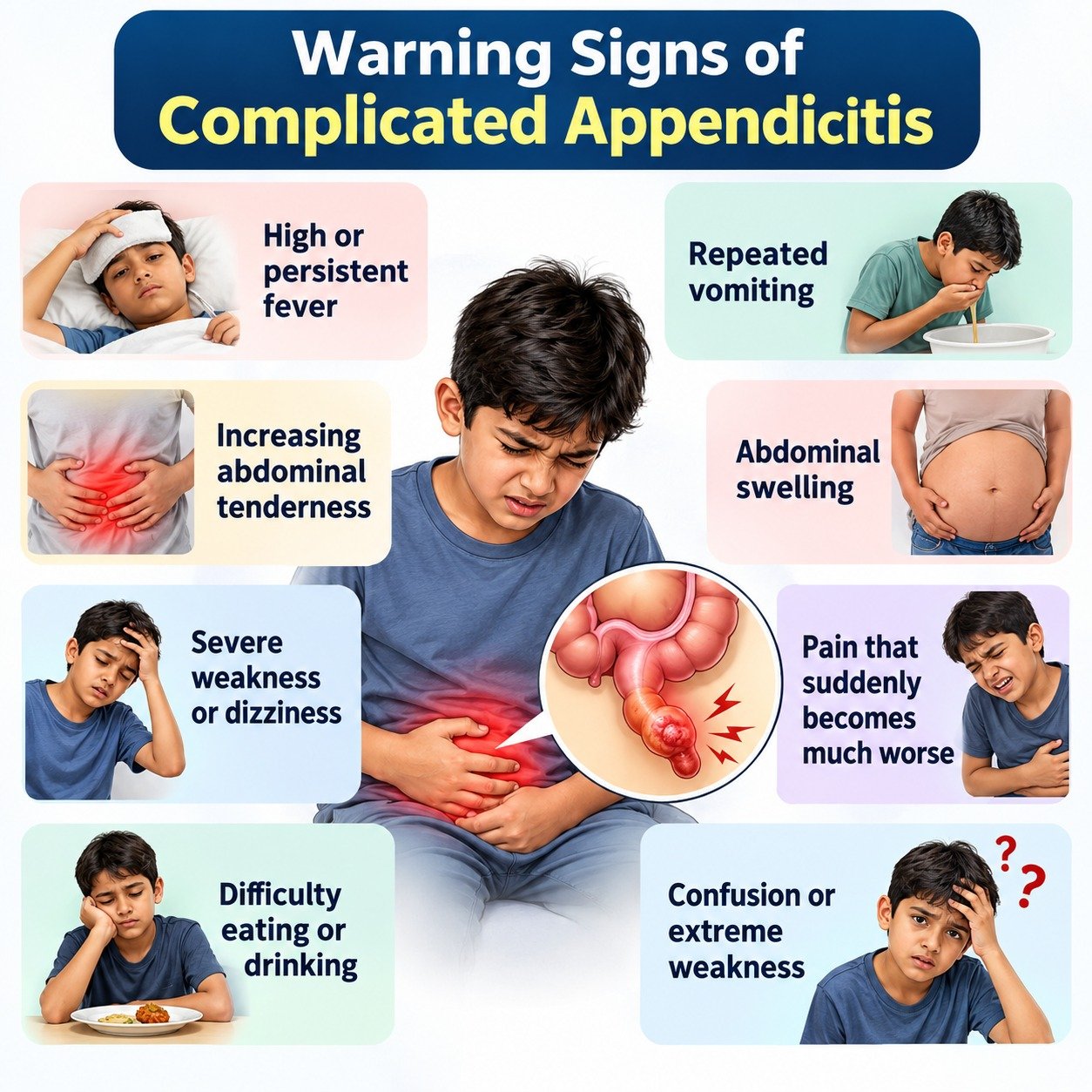
Warning Signs of Complicated Appendicitis
Seek urgent medical attention if abdominal pain is becoming severe or is accompanied by symptoms such as:
- High or persistent fever
- Repeated vomiting
- Increasing abdominal tenderness
- Abdominal swelling
- Severe weakness or dizziness
- Pain that suddenly becomes much worse
- Difficulty eating or drinking
- Confusion or extreme weakness
Not every case of abdominal pain is appendicitis. However, severe or worsening symptoms should never be ignored.
When Should You See a Doctor for Appendicitis?
You should consider medical evaluation when abdominal pain is persistent, worsening, or associated with fever, nausea, vomiting, or loss of appetite.
Early assessment can help a doctor determine whether the symptoms are related to appendicitis or another abdominal condition. Depending on the symptoms, the doctor may recommend a physical examination, blood tests, ultrasound, CT scan, or other investigations.
How Is Appendicitis Diagnosed?
Diagnosis usually begins with a discussion about symptoms and a physical examination.
The doctor may check where the abdominal pain is located and look for tenderness or other signs of inflammation. Blood tests can help identify infection or inflammation.
Imaging tests such as an ultrasound or CT scan may be recommended when the diagnosis is uncertain or when complications are suspected.
How Is Appendicitis Treated?
Treatment depends on the severity of appendicitis and the patient’s overall condition.
In many cases, surgery to remove the appendix, called an appendectomy, is recommended. Antibiotics and supportive treatment may also be used as part of the management plan.
Patients looking for Appendix Treatment in Dombivli should seek assessment from a qualified surgeon rather than delaying treatment because abdominal pain may worsen unexpectedly.
For patients also looking for care related to another common abdominal condition, Jeevanshree Hospital provides access to a Hernia Doctor in Dombivli for evaluation and treatment of hernia-related problems.
What is an Appendectomy?
An appendectomy is a surgical procedure to remove an inflamed appendix. Depending on the patient’s condition, the surgeon may perform the procedure using a minimally invasive laparoscopic approach or another appropriate surgical technique.
The choice of procedure depends on factors such as the severity of inflammation, whether the appendix has ruptured, the patient’s medical condition, and the surgeon’s assessment.
Patients searching for an Appendectomy Surgeon in Dombivli should discuss the available
What Is Recovery Like After Appendix Surgery?
Recovery varies depending on the type of surgery and whether complications were present.
Patients with uncomplicated appendicitis may recover more quickly than those who have experienced a ruptured appendix or abdominal infection.
After surgery, patients are generally advised to follow their surgeon’s instructions regarding diet, physical activity, wound care, medicines, and follow-up appointments.
Returning to strenuous activities too quickly may interfere with recovery, so activity should be increased according to medical advice.
Why Timely Treatment Matters
The main reason to seek early medical attention is that appendicitis can change from a relatively straightforward condition into a complicated infection.
Early diagnosis allows the medical team to assess the appendix and decide on appropriate treatment. Delaying evaluation because the pain seems manageable can increase the risk of complications in some patients.
People searching for Appendix Doctors in Dombivli should not rely only on online information when they have significant abdominal symptoms. A physical examination and appropriate investigations are important for diagnosis.
For patients who need local medical guidance, Appendix Specialist Doctors in Dombivli can evaluate symptoms and recommend an appropriate treatment approach based on the individual’s condition.
For another local medical-care option, patients can also find the location of Jeevanshree Hospital through this Hernia Specialist in Dombivli location resource.
Conclusion
Appendicitis can become serious when treatment is delayed. Inflammation may progress to appendix rupture, abscess formation, peritonitis, or other complications. Recognising warning signs and seeking timely medical evaluation can help reduce the risk of serious complications.
If you experience persistent or worsening abdominal pain, fever, vomiting, or tenderness, consult a qualified medical professional promptly. Patients looking for an Appendix Specialist Doctor in Dombivli can discuss their symptoms with Dr. Rahul Mahadar at Jeevanshree Hospital and receive an evaluation based on their individual condition.

Previous Post