

What Are the Common Symptoms of Colon Cancer?
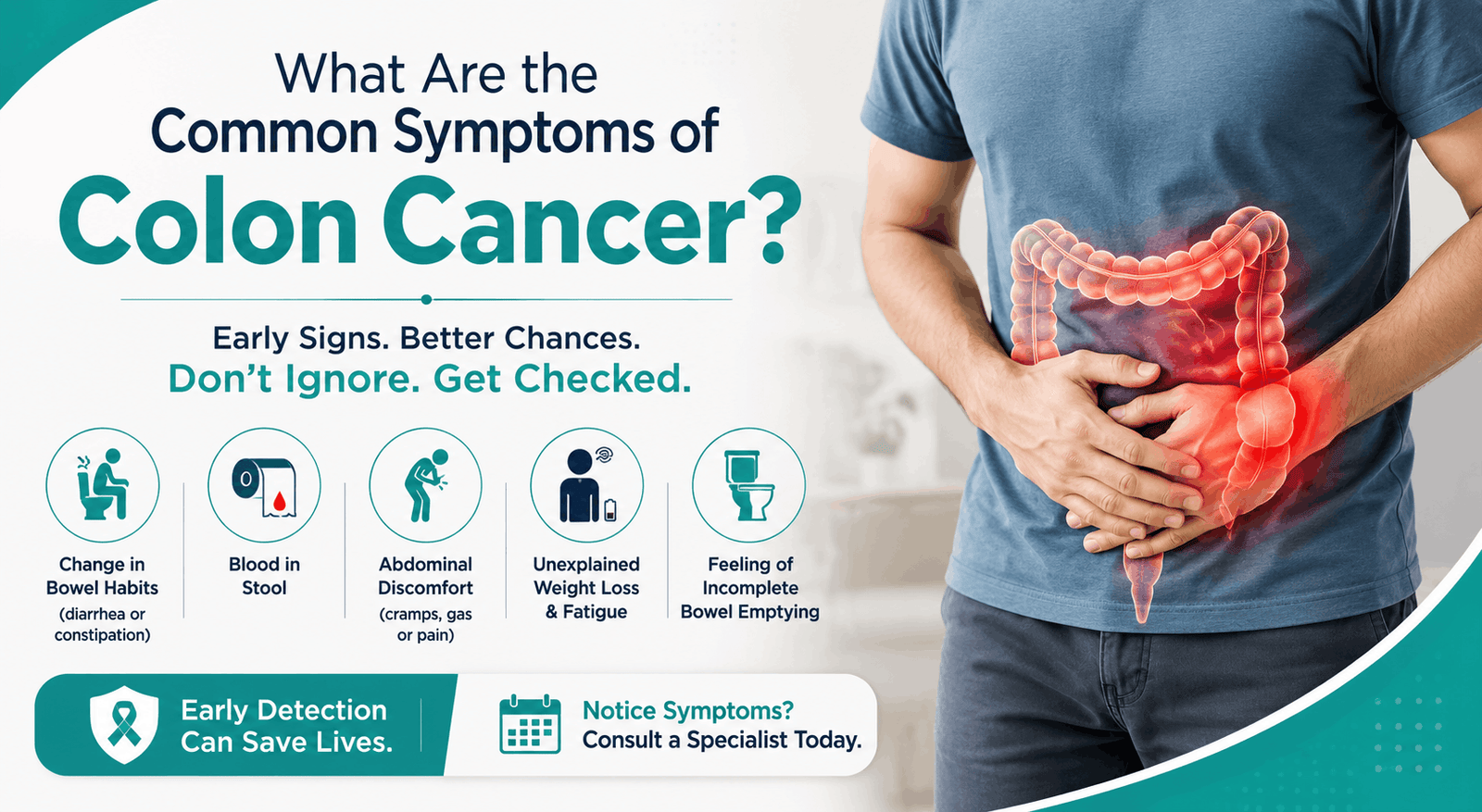
Colon cancer can develop gradually, and some people may not notice clear symptoms in the early stages. What Are the Common Symptoms of Colon Cancer? Common warning signs include changes in bowel habits, blood in the stool, abdominal discomfort, unexplained weight loss, and persistent tiredness. However, these symptoms can also occur due to conditions other than cancer, so proper medical evaluation is important.
What Is Colon Cancer?
Colon cancer is a type of cancer that develops in the colon, which is an important part of the large intestine. It can begin as a growth called a polyp, and some types of polyps can eventually become cancerous. Regular screening can help detect abnormal growths or cancer at an earlier stage.
Understanding possible symptoms can help you know when it is important to speak with a doctor. Not every digestive problem means cancer, but persistent or unusual changes should not be ignored.
What Are the Common Symptoms of Colon Cancer?
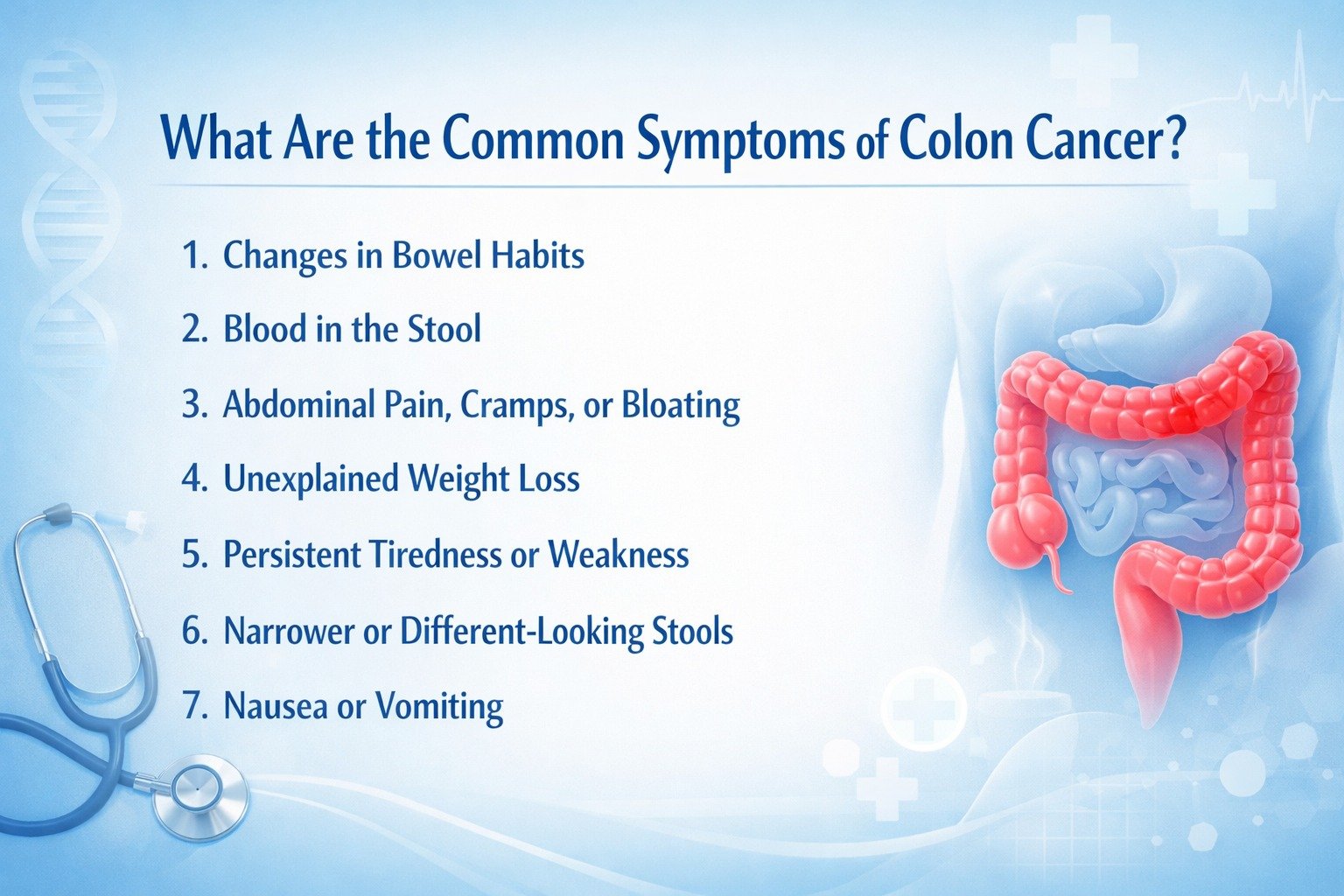
Colon cancer symptoms can vary from person to person. Some people may have several symptoms, while others may have very few or none in the early stages.
1. Changes in Bowel Habits
One of the common warning signs is a change in your usual bowel pattern. This may include constipation, diarrhoea, or alternating between constipation and diarrhoea.
You may also feel that your bowel does not completely empty after using the toilet. A change that continues or keeps returning should be discussed with a healthcare professional.
2. Blood in the Stool
Blood in the stool is another symptom that should not be ignored. It may appear as bright red blood or make the stool look very dark.
Rectal bleeding can have many causes, including haemorrhoids and other digestive conditions. However, because bleeding can also be associated with colon cancer, it is important to have persistent or unexplained bleeding evaluated by a doctor.
3. Abdominal Pain, Cramps, or Bloating
Some people with colon cancer may experience abdominal discomfort, cramps, bloating, gas, or a feeling of fullness. These symptoms may be mild at first and can easily be confused with common digestive problems.
If abdominal discomfort continues, becomes frequent, or occurs along with other warning signs such as blood in the stool or unexplained weight loss, medical advice should be sought.
4. Unexplained Weight Loss
Losing weight without making changes to your diet or physical activity can be a warning sign of several health conditions, including certain cancers.
Unexplained weight loss does not automatically mean colon cancer. However, unexpected weight loss combined with bowel changes, abdominal symptoms, or fatigue should be assessed by a doctor.
5. Persistent Tiredness or Weakness
Feeling unusually tired for a long time may also occur with colon cancer. In some cases, bleeding from the digestive tract can contribute to anaemia, which may cause weakness or fatigue.
If you feel persistently tired without an obvious reason, especially when it occurs with bowel changes or blood in the stool, consult a healthcare professional.
6. Narrower or Different-Looking Stools
A noticeable and persistent change in the shape or size of your stools can sometimes be associated with changes inside the colon. For example, stools may become narrower than usual.
A temporary change does not necessarily indicate a serious condition. However, if the change continues or appears together with other symptoms, it is worth discussing with a doctor.
7. Nausea or Vomiting
Some people with colon cancer may experience nausea or vomiting, particularly when the disease affects normal bowel function. These symptoms can also occur with many common digestive illnesses.
Persistent vomiting, severe abdominal pain, or an inability to pass stool or gas requires prompt medical attention.
When Should You See a Doctor?
You should consider speaking with a doctor if you notice persistent changes in your bowel habits, blood in your stool, unexplained weight loss, ongoing abdominal discomfort, or unusual tiredness.
It is important not to wait for severe pain before seeking medical advice. Cancer does not always cause pain in its early stages, and many symptoms can have causes other than cancer.
Early medical evaluation can help identify the actual cause of your symptoms and determine whether further testing is needed.
How Is Colon Cancer Diagnosed?
A doctor may first ask about your symptoms, medical history, family history, and bowel habits. Depending on the situation, further tests may be recommended.
Colonoscopy is one of the tests used to examine the colon and can help identify abnormal growths or cancer. Other tests may also be used depending on the person’s symptoms and medical needs.
Screening is also important because colorectal cancer can sometimes be present before symptoms appear. Your doctor can advise you about whether screening is appropriate based on your age, family history, risk factors, and overall health.
Can Colon Cancer Be Prevented or Detected Early?
There is no single way to completely prevent colon cancer, but screening can help detect precancerous polyps or cancer at an earlier stage. Finding and removing certain polyps can help prevent colorectal cancer from developing.
Maintaining healthy lifestyle habits and discussing your individual risk factors with a doctor can also be part of a broader approach to colorectal health.

What About Appendix Problems?
Appendix-related symptoms can sometimes be confused with other abdominal conditions. If you are experiencing pain in the lower right side of the abdomen, fever, nausea, vomiting, or other symptoms suggestive of appendicitis, it is important to get evaluated rather than assuming the symptoms are related to colon cancer.
Patients looking for Appendix Treatment in Dombivli can consult an appropriate general or gastrointestinal surgeon for evaluation. The doctor can determine whether the symptoms are due to appendicitis or another abdominal condition and recommend suitable treatment.
For patients searching for Appendix Specialist Doctors in Dombivli choosing a doctor who can properly assess abdominal pain is important. Depending on the diagnosis, treatment may involve medicines, observation, or surgery.
Appendix Surgery and Specialist Care in Dombivli
When appendicitis requires surgery, an appendectomy may be recommended to remove the inflamed appendix. Patients researching Appendix Surgery in Dombivli should first undergo a proper examination and diagnostic assessment.
People searching online for Appendix Doctors in Dombivli or an Appendectomy Surgeon in Dombivli should focus on appropriate evaluation and treatment rather than relying only on online symptom information. The right treatment depends on the patient’s symptoms, examination findings, and test results.
Terms such as Appendix Laser Surgery in Dombivli may also be used when patients are researching minimally invasive approaches. However, the appropriate surgical technique should be decided by the treating surgeon based on the patient’s condition.
Get the Right Medical Evaluation in Dombivli
Digestive symptoms should not always be assumed to be cancer. Constipation, bleeding, abdominal pain, bloating, and changes in bowel habits can have many different causes. However, persistent or unusual symptoms deserve professional evaluation.
If you are looking for a Appendix Specialist Doctor in Dombivli Jeevanshree Hospital can help patients understand their symptoms and identify the appropriate next step.
For patients who also need information about hernia-related concerns, you can learn more about the hospital’s Best Hernia Surgeon services.
You can also find the Hernia Doctor through Google Maps for location and consultation information.
Conclusion
Knowing What Are the Common Symptoms of Colon Cancer? can help people recognise changes that deserve medical attention. Blood in the stool, persistent bowel changes, abdominal discomfort, unexplained weight loss, unusual tiredness, and changes in stool appearance are some symptoms that should not be ignored.
These symptoms do not automatically mean that a person has cancer, but timely medical evaluation can help identify the actual cause. If you have persistent digestive symptoms, speak with a qualified healthcare professional for an appropriate evaluation and treatment plan.
 Next Post