


What Are the Symptoms of an Intestinal Blockage?
An intestinal blockage occurs when food, fluids, gas, or stool cannot move normally through the intestines. Understanding What Are the Symptoms of an Intestinal Blockage? can help people recognise warning signs and seek medical care at the right time. Common symptoms include severe abdominal pain, swelling in the abdomen, vomiting, constipation, and difficulty passing gas. An intestinal blockage can be partial or complete, and some cases require urgent medical treatment. At Jeevanshree Hospital in Dombivli, patients can consult a doctor for proper evaluation and guidance if they experience persistent digestive problems.
What Is an Intestinal Blockage?
An intestinal blockage, also called bowel obstruction, happens when something prevents the normal movement of contents through the small or large intestine. The blockage may develop gradually or appear suddenly, depending on its cause.
A partial blockage allows some food, fluid, and gas to pass through, while a complete blockage stops the passage more significantly. Without timely treatment, an obstruction can affect the blood supply to the intestine and may cause serious complications.
Early diagnosis is important because treatment depends on the location, severity, and underlying cause of the blockage.
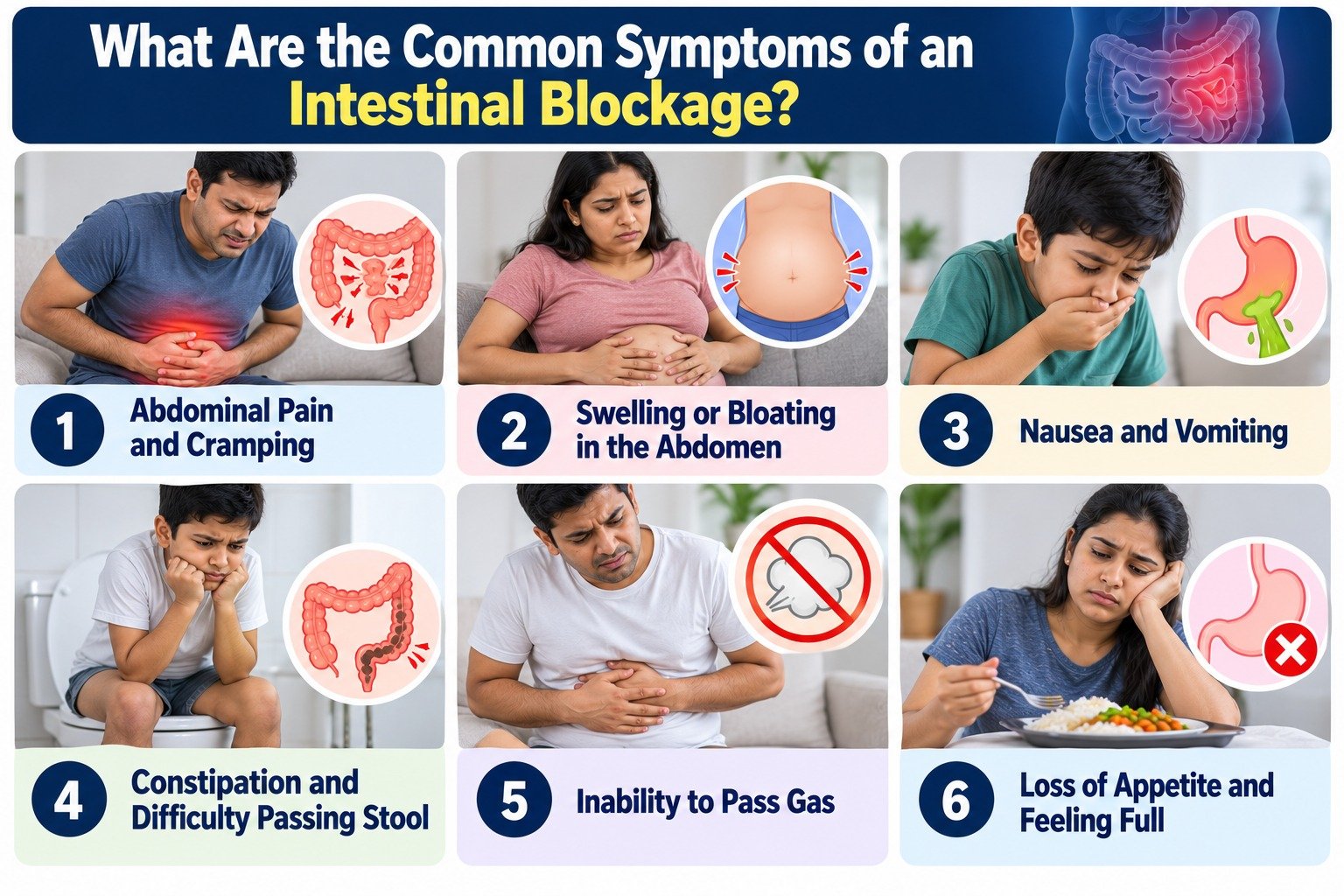
What Are the Common Symptoms of an Intestinal Blockage?
The symptoms of an intestinal blockage may vary from person to person. Some people experience mild discomfort at first, while others develop severe symptoms that require emergency medical attention.
1. Abdominal Pain and Cramping
Abdominal pain is one of the most common symptoms of an intestinal blockage. The pain may come in waves as the intestines try to push their contents through the blocked area.
Some people experience cramping around the middle or lower abdomen. If the pain becomes severe, constant, or suddenly worsens, it may indicate a serious complication and requires immediate medical evaluation.
2. Swelling or Bloating in the Abdomen
A blocked intestine can cause gas and fluids to build up inside the digestive tract. This may make the abdomen look swollen or feel tight and uncomfortable.
You may notice that your stomach feels fuller than usual, even when you have not eaten much. Persistent abdominal swelling, especially when combined with pain or vomiting, should not be ignored.
3. Nausea and Vomiting
Nausea and vomiting can occur when food and digestive fluids cannot move normally through the intestines. Vomiting may happen repeatedly, particularly when the blockage is severe or located in the small intestine.
Some people may also struggle to keep food or liquids down. Repeated vomiting can cause dehydration and electrolyte imbalances, so prompt medical attention is important.
4. Constipation and Difficulty Passing Stool
Another possible sign is difficulty passing stool. A person may experience constipation, reduced bowel movements, or a sudden change in their usual bowel habits.
However, passing stool does not always rule out an intestinal blockage. Stool already present below the blockage may still pass, particularly during the early stages or with a partial obstruction.
5. Inability to Pass Gas
Difficulty passing gas is an important warning sign, especially when it occurs alongside abdominal pain, swelling, and vomiting.
A complete blockage may prevent both stool and gas from moving through the intestines. If you suddenly cannot pass gas or stool and develop abdominal pain or swelling, seek emergency medical care.
6. Loss of Appetite and Feeling Full
An intestinal blockage can make eating uncomfortable. You may feel full after eating only a small amount or lose interest in food because of nausea, abdominal discomfort, or bloating.
Although loss of appetite can happen with many digestive conditions, it should be assessed if it persists or occurs with other symptoms of bowel obstruction.
What Causes an Intestinal Blockage?
Several conditions can prevent the intestines from functioning normally. Identifying the cause helps doctors choose the most suitable treatment.
Common causes include:
- Abdominal adhesions: Bands of scar tissue that may develop after abdominal surgery and pull or compress the intestines.
- Hernias: A section of the intestine may become trapped in a weak area of the abdominal wall.
- Tumours: Growths inside or around the intestine can narrow the passage and obstruct the movement of bowel contents.
- Intestinal twisting: A condition called volvulus occurs when a section of the intestine twists around itself.
- Inflammatory bowel conditions: Diseases such as Crohn’s disease may cause swelling or narrowing of the intestinal passage.
- Severe constipation: A hard mass of stool can sometimes block the rectum or lower intestine.
Not every case has the same cause. A doctor may recommend a physical examination, blood tests, abdominal X-rays, or a CT scan to determine what is happening.
When Should You Seek Medical Attention?
An intestinal blockage can become a medical emergency. Do not wait for symptoms to disappear if you suspect a bowel obstruction.
Seek emergency medical care if you experience:
- Severe or worsening abdominal pain.
- Repeated vomiting.
- A swollen abdomen with an inability to pass gas or stool.
- Significant abdominal tenderness.
- Fever or a rapid heartbeat along with abdominal symptoms.
- Signs of dehydration, such as dizziness, weakness, or very little urine.
These symptoms may indicate a serious intestinal obstruction or complications that require immediate medical attention. Consult a qualified GI surgeon in Dombivli for timely evaluation and appropriate treatment. Do not use laxatives or home remedies without medical advice. If a complete blockage is suspected, avoid eating or drinking and seek urgent medical care. A Gastro Surgeon in Dombivli can assess the condition and recommend the appropriate treatment based on the cause and severity.
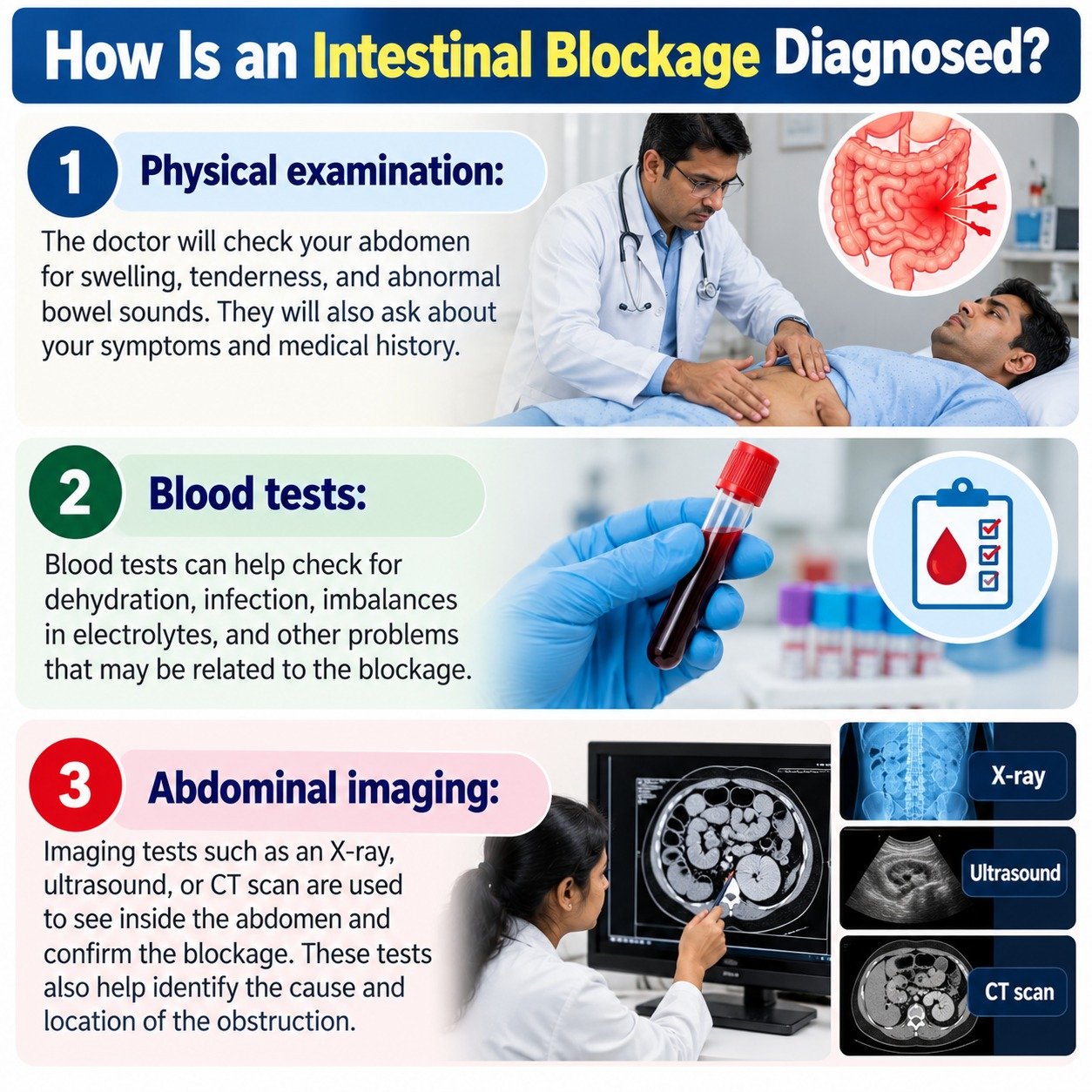
How Is an Intestinal Blockage Diagnosed?
Doctors diagnose an intestinal blockage by reviewing symptoms, medical history, and examination findings. They may ask when the pain started, whether vomiting has occurred, and when you last passed stool or gas.
Depending on the situation, investigations may include:
Physical examination: The doctor checks for abdominal swelling, tenderness, and other signs of obstruction.
Blood tests: These can help identify dehydration, electrolyte disturbances, infection, or other complications.
Abdominal imaging: X-rays or a CT scan may help locate the blockage and identify its possible cause.
Early diagnosis helps the medical team decide whether the blockage can be managed without surgery or requires an operation.
What Are the Treatment Options for an Intestinal Blockage?
Treatment depends on the cause, location, and severity of the obstruction. Some partial blockages may improve with hospital-based supportive care, while complete blockages often require more urgent intervention.
Treatment may include:
- Fluids through an IV: These help correct dehydration and maintain the body’s fluid balance.
- Bowel decompression: A tube passed through the nose into the stomach may be used to remove accumulated fluids and gas.
- Monitoring and medical care: Selected cases may be managed in hospital under close medical supervision.
- Surgery: An operation may be necessary to remove the blockage, release scar tissue, repair a hernia, or remove a damaged section of intestine.
Patients who require surgical assessment can consult a qualified Gastrointestinal Surgeon in Dombivli for evaluation and treatment planning. The appropriate approach depends on the patient’s condition and the cause of the obstruction.
Can an Intestinal Blockage Be Prevented?
Not every intestinal blockage can be prevented, but some measures may help reduce the risk of certain causes.
- Eat a balanced diet with adequate fibre when appropriate for your digestive health.
- Drink enough water throughout the day.
- Stay physically active to support normal bowel movements.
- Seek medical advice for persistent constipation or unexplained abdominal pain.
- Follow your doctor’s recommendations after abdominal surgery.
- Get hernias and ongoing digestive symptoms evaluated promptly.
If you have already been diagnosed with intestinal narrowing or obstruction, avoid increasing fibre intake or making major dietary changes without medical advice. Consulting the best gastro surgeon in Dombivli can help you understand which foods are safe for your condition and whether a modified diet is necessary.
Why Choose Jeevanshree Hospital in Dombivli for Surgical Evaluation?
Recognising digestive symptoms and seeking timely medical attention are important steps in managing an intestinal blockage. Jeevanshree Hospital in Dombivli provides patients with a place to seek medical evaluation and guidance for their healthcare concerns.
Patients looking for the best gastroenterologist hospital in Dombivli should consider the doctor’s qualifications, diagnostic facilities, available treatment options, and experience managing digestive conditions. A proper assessment helps determine whether medication, hospital observation, or surgery may be required.
For patients who need an assessment for Gastrointestinal Surgery in Dombivli consultation with an appropriately qualified surgeon can help establish the cause of the obstruction and discuss suitable treatment options.
You can also learn more about Laparoscopic Surgery in Dombivli, which may be suitable for certain abdominal conditions depending on the patient’s diagnosis. To find the hospital’s listed location, visit the Best Laparoscopic Surgeon
Conclusion
Understanding What Are the Symptoms of an Intestinal Blockage? can help you recognise warning signs such as abdominal pain, bloating, vomiting, constipation, and difficulty passing gas. These symptoms should not be ignored, especially when they occur together or become severe.
An intestinal blockage may require urgent treatment to prevent serious complications. If you experience symptoms suggesting a bowel obstruction, seek immediate medical evaluation. For non-emergency digestive concerns, Jeevanshree Hospital in Dombivli can be a starting point for consultation and guidance on appropriate care.
 Previous Post